Role-Based Access: Protect Installment Business Data From Staff Misuse
Why Role-Based Access Protects Installment Business Data From Staff Misuse
Most businesses trust their staff. Role-based access isn’t about assuming otherwise — it’s about making sure that trust isn’t the only thing standing between a customer’s data and misuse, especially once a business grows past a size where everyone reports directly to the owner.
It’s an uncomfortable topic for most business owners, and one that rarely gets discussed until after something’s gone wrong. A staff member with unrestricted access to every customer record, every balance, and every guarantor’s contact details has far more opportunity for misuse than one whose access is limited to what their specific job actually requires — regardless of how much anyone trusts that individual personally.
What role-based access actually means in practice
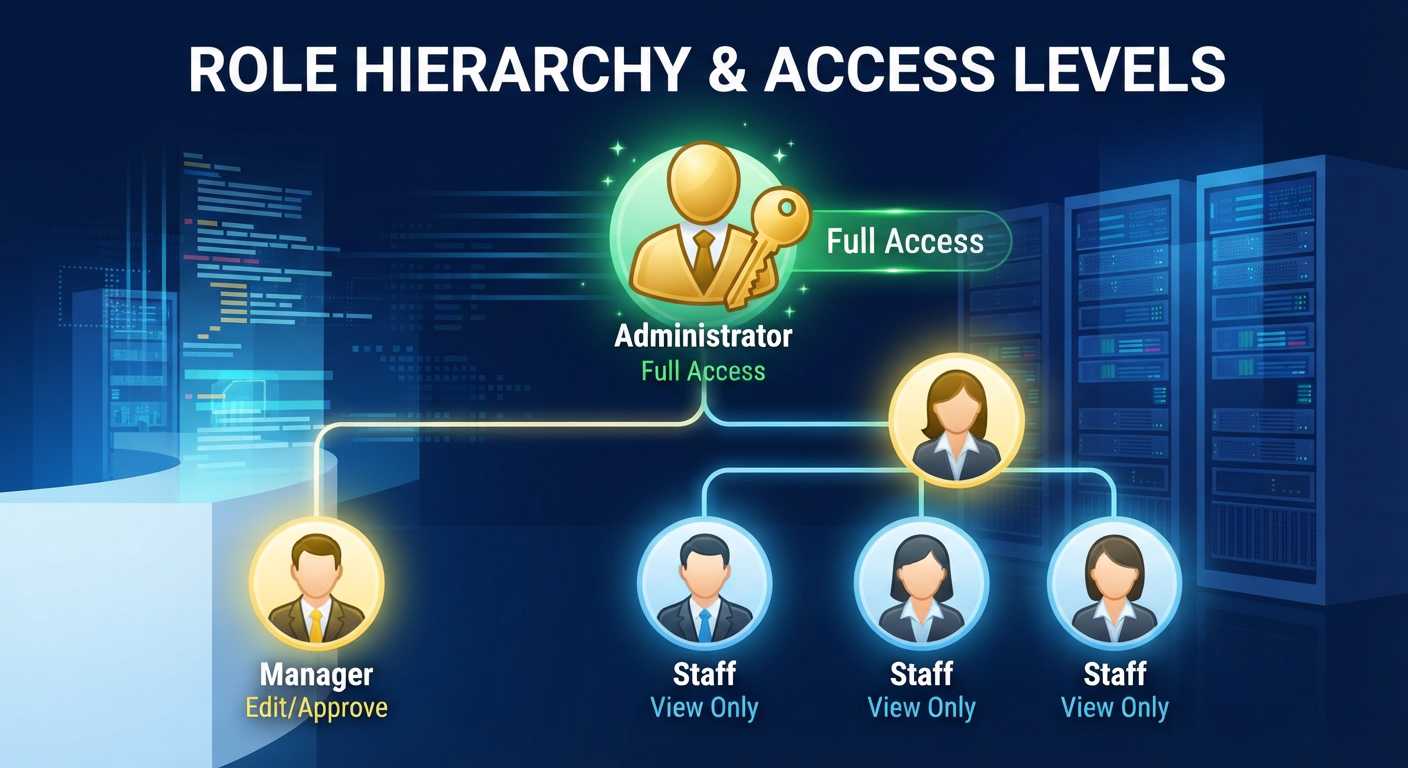
Role-based access ties data visibility and editing rights to a staff member’s job function, rather than giving everyone who logs in the same unrestricted view. A branch cashier recording payments doesn’t need the ability to edit a customer’s guarantor details or delete a payment history. A branch manager needs full visibility into their own location’s accounts, but not necessarily another branch’s. Head office needs the consolidated picture across everything.
Why “we trust our staff” isn’t actually the point
Owners often resist access controls because it feels like an accusation directed at people they genuinely trust. That framing misses what access control is actually protecting against. Most staff misuse of data isn’t premeditated fraud from day one — it’s a small liberty taken because the opportunity existed and nobody was watching closely, that then becomes easier to repeat once it goes unnoticed the first time. Limiting unnecessary access removes that opportunity before it can develop into a pattern, protecting both the business and, honestly, the staff member from a situation they might not have gotten into if the access simply hadn’t been there.
Broad access without an audit trail is the riskiest combination. If everyone can see and edit everything, and there’s no record of who changed what, a discrepancy discovered later has no trail leading back to a specific person or action.
Audit trails: the other half of the equation
Restricting access is half of data protection. Knowing who did what, and when, is the other half. An audit trail — a log of every login, every edit, every deletion, tied to a specific user — turns access control from a preventive measure into an accountable one. Staff who know their actions are logged behave differently than staff who believe nothing is being tracked, and when a discrepancy does surface, an audit trail is what actually lets a business trace it back to its source instead of guessing.
What this looks like when something actually goes wrong
Consider a scenario every multi-branch business owner worries about privately: a customer’s balance shows as paid in full, but the money never reached the bank. Without role-based access and an audit trail, resolving this means asking around and hoping someone remembers. With both in place, the business can see exactly which staff account marked the payment, when, and whether that staff member’s role even had permission to make that specific change — turning a vague suspicion into a traceable fact within minutes rather than days of uncertain investigation.
The absence of this system doesn’t just slow down resolution — it changes the tone of the investigation entirely. Without a clear trail, everyone with any access at all becomes a potential suspect, which is corrosive to a small team regardless of whether anyone actually did anything wrong. A proper audit trail narrows the question from “who might have done this” to “here’s exactly who did this,” which protects innocent staff just as much as it identifies genuine misuse.
Building the habit before it’s urgently needed
The businesses that implement role-based access well are rarely doing it in response to a crisis — they build it in early, when there are only one or two staff and the stakes still feel low. Retrofitting proper access controls onto a business that’s operated for years with everyone seeing everything is possible, but it’s a harder, more disruptive change than building the habit from the start. Every new hire, at any stage, is a natural point to ask what access this specific role genuinely needs, rather than defaulting to giving everyone the same broad permissions the last person had.
The conversation this actually needs, with staff themselves
Introducing role-based access after a business has operated without it for a while can feel, from a staff member’s perspective, like a trust downgrade — access that existed yesterday suddenly doesn’t exist today. Handled without explanation, this breeds resentment rather than security. Handled with a straightforward conversation about why the change is happening — protecting everyone, including the staff themselves, from being wrongly suspected if a discrepancy ever comes up — tends to land very differently. Most staff, told honestly that scoped access protects them as much as the business, understand the logic quickly, especially once they realize an audit trail also clears their name automatically if something goes wrong somewhere they had no access to touch.
Access scoped to the role, every time
QistBook gives every staff member exactly the access their role needs, with a full audit trail behind every action.
Schedule a DemoFrequently Asked Questions
What is role-based access in installment business software?
Role-based access means each staff member’s ability to view or edit data is tied to their job role — a branch cashier sees different information than a branch manager, who sees different information than head office.
Can role-based access actually prevent staff fraud?
It reduces the opportunity and creates a deterrent through visible accountability, but it works alongside an audit trail rather than replacing one. Limiting who can do what, combined with logging who did what, is what actually protects data.
Do small installment businesses with one or two staff need role-based access?
The risk is lower with very few staff, but the habit is worth building early. Access controls that exist from the start scale naturally as a business grows, rather than needing to be retrofitted onto years of unrestricted access.
Related reading

Umaira
I explore the people and processes behind successful installment businesses, including customer relationships, sales practices, staff workflows, and everyday challenges faced by retailers. Through my writing, I aim to present useful ideas and real-world approaches that make complex business practices easier to understand and apply in a busy retail environment.
View all posts →