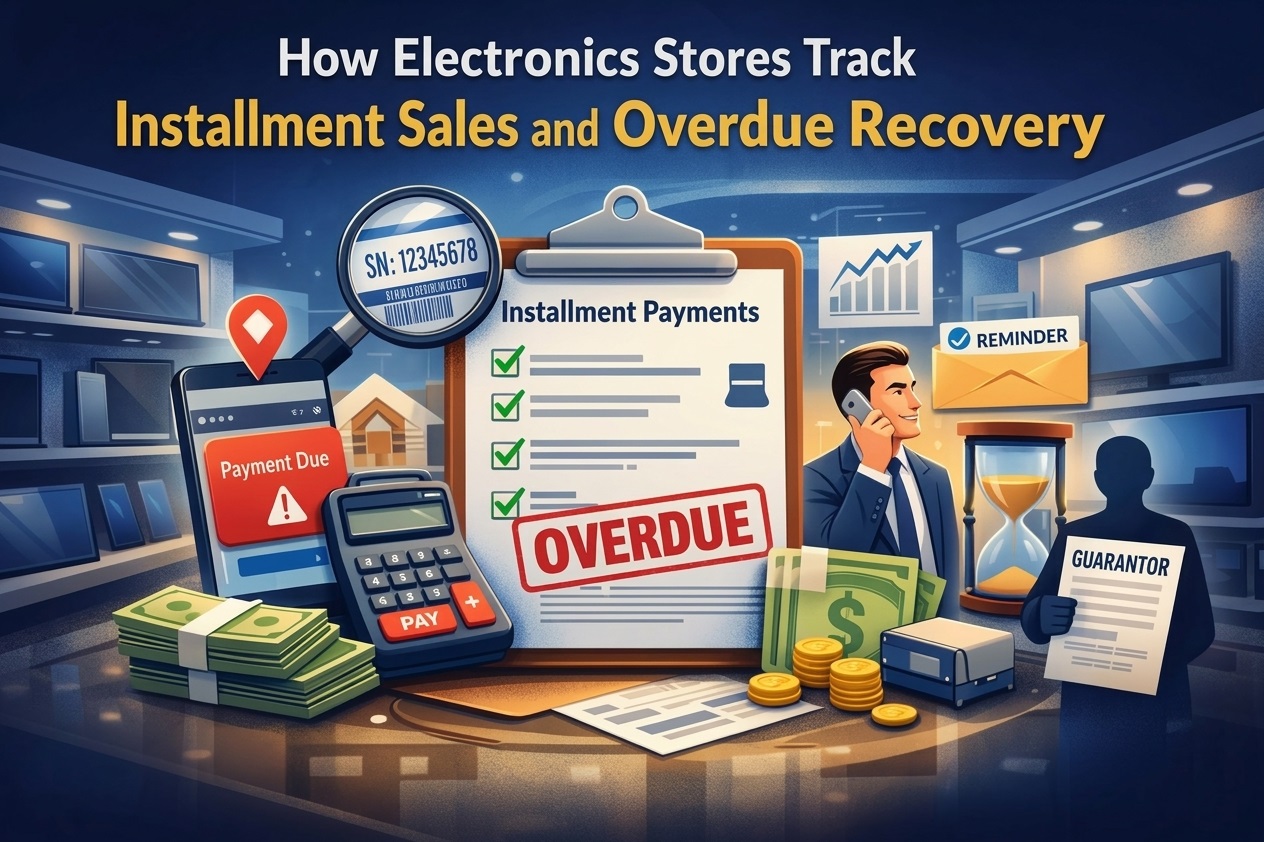
Walk into any electronics market in Pakistan — Hafeez Centre in Lahore, Regal Chowk in Karachi, or Saddar in Rawalpindi — and many TVs, fridges, and ACs are sold on installment rather than for cash. For retailers, electronics store installment recovery starts with tracking each sale, payment schedule, product serial number, and customer follow-up in one reliable process. Electronics retail is a major qist category, but appliances create tracking challenges that a mobile shop or furniture dealer may not face.
An electronics store selling on installment isn’t managing one kind of sale — it’s managing a fridge on a 6-month plan, a TV on a 3-month plan, and an AC that only sold because of a Ramzan promotion, all at once, all with different serial numbers to track if something goes wrong.
This guide explains electronics store installment recovery for Pakistani retailers, including seasonal demand, appliance installment recovery, and practical electronics shop qist tracking. A consistent electronics store installment recovery process links each customer’s payment plan to the correct product, serial number, delivery status, and follow-up date. These habits help prevent missed installments, misplaced records, and overdue balances.
Three predictable spikes — plan inventory and staffing around them, not around a flat monthly average
Electronics Store Installment Recovery Best Practices
Six practical electronics store installment recovery habits to help retailers track payments, products, and overdue balances.
Serial Number Logged Against Every Sale, Not Just the Receipt
A mobile phone has an IMEI; a fridge, TV, or AC has a serial number printed on a plate or sticker, usually on the back or underside of the unit. Logging that serial number against the customer’s installment record — not just writing it on a paper receipt that can get lost — means you can identify the exact unit if a payment dispute or a warranty question comes up months into the plan. This record is a core part of electronics store installment recovery because it connects the payment history with the physical product.
Delivery and Installation Tracked Separately from Payment
Fridges and ACs usually need delivery, and ACs need installation on top of that — both of which can happen days after the sale itself. If your tracking only starts once the unit is delivered, you lose visibility on orders sitting in the gap between sale and installation, which is exactly when a customer might reconsider or delay their first payment. Recording each milestone gives your electronics store installment recovery workflow a clear starting point.
Warranty Claims Handled Without Pausing the Installment Plan
A customer whose new fridge develops a fault three months into a 9-month plan is understandably reluctant to keep paying for something that isn’t working. Handle the warranty claim quickly and separately from the payment schedule — the plan continues, the repair or replacement happens on its own track — rather than letting an unresolved service issue turn into an unofficial payment pause that’s hard to reverse later.
Seasonal Promotions Tracked as Their Own Batch
Ramzan and Eid promotions, wedding-season bundle deals, and summer AC discounts often come with slightly different terms — a lower down payment, a promotional plan length, or a bundled accessory. Tagging these sales as a distinct batch makes it much easier to review how a specific promotion actually performed on recovery, rather than mixing them into your general customer list and losing that insight. Reviewing each batch helps you improve future electronics store installment recovery decisions.
Recovery Follow-Up Timed to the Product, Not a Flat Rule
A missed installment on a Rs 35,000 TV plan and a missed installment on a Rs 180,000 AC plan don’t carry the same urgency, and treating them identically wastes attention on the smaller case while under-prioritizing the larger one. Many electronics retailers weight their follow-up queue by outstanding balance, not just by days overdue, so the highest-value accounts get contacted first.
Guarantor Details Collected at the Same Weight as the Buyer’s
Appliance tickets are large enough that a guarantor genuinely matters, yet it’s common to see the guarantor’s details noted briefly while the buyer’s are recorded properly. Since guarantor obligations only carry weight if they’re documented clearly, giving the guarantor’s CNIC, phone number, and relationship the same care as the buyer’s isn’t optional — it’s the difference between a guarantor clause that means something and one that doesn’t. Complete records also support consistent electronics store installment recovery when an account becomes overdue.
⚠ Watch Out For
Patterns specific to electronics retail that catch new sellers off guard.
- Serial number swaps at delivery. The unit delivered isn’t always the exact one shown or agreed at the counter — confirm the serial number matches at handover, not after.
- Promotional plans with no clear end. A Ramzan discount plan without a firm written end date tends to drift, with customers assuming the promotional terms apply indefinitely.
- Warranty disputes used to justify non-payment. A genuine service issue is not the same as a reason to stop paying — the two need to be handled as separate conversations.
- Bundled accessories left untracked. A free stand, stabilizer, or installation kit bundled into a promotion should still appear on the customer’s record, or its value becomes a point of dispute later.
- Peak-season rush skipping verification steps. The busiest days — right before Eid, in peak summer heat — are exactly when staff are most tempted to skip CNIC and guarantor checks to move faster.
Track Every Serial Number, Plan, and Guarantor in One Place
QistBook keeps appliance serial numbers, delivery status, guarantor records, and payment schedules tied to each customer — searchable instantly during a warranty question or a recovery call. These linked records support electronics store installment recovery by helping staff see what is due, what has been paid, and which account needs attention.
None of these habits require a big operational overhaul — most electronics retailers already do some version of them informally, just inconsistently, and usually only for the customers they happen to remember clearly. The businesses with genuinely low default rates in this category aren’t doing anything exotic. They’re applying the same six habits to every sale, every season, whether it’s a slow Tuesday in February or the rush before Eid when it’s tempting to cut corners just to keep the line moving.
Electronics Store Installment Recovery FAQs
For general guidance on protecting buyers and handling product-related concerns, review the Government of Punjab’s official website and consult the relevant consumer-protection authority for your area. Clear documentation and fair communication should remain part of every electronics store installment recovery process.

Ahsan
I focus on the practical side of running a credit-based retail business, with a particular interest in customer verification, guarantor management, recovery procedures, and reducing the risks associated with installment sales. I share practical guidance based on the situations retailers commonly face, helping business owners build stronger processes for approving customers and handling credit responsibly.
View all posts →